Based on the provided reference content and images, I will create a professional, detailed article. The article will center on the theme of "HK companies returning to A-shares," with a clear structure and timely references to the images.
Over 10 HK-Listed Companies This Year Refresh "Return to A-Share" Progress Bar: Policy and Market Mutual Drive Push Trend Toward Normalization
In recent years, the listing path of "Hong Kong first, then A-shares" has increasingly become a notable landscape in the capital market. Entering 2026, this trend has not slowed but accelerated. According to incomplete statistics, since the start of the year, over ten HK-listed companies—including Zhengli New Energy, Lige Resources, Everbright Environment, and Yinge Biotech—have intensively disclosed their progress timetables for returning to the A-share market, covering key stages such as internal resolutions, regulatory acceptance, and inquiry responses. Behind this phenomenon lies the joint drive of policy support, market logic, and corporate strategy, indicating that HK companies' return to A-shares is gradually shifting from occasional to normal.

I. Trend Emergence: From AI Large Models to Innovative Drugs, Multiple Tracks Advance Together
The trend of HK companies returning to A-shares is no longer confined to specific industries but has expanded to multiple tracks in the tech sector, demonstrating robust vitality.
In the AI large model field, leading companies are actively deploying. For example, MINIMAX, which listed on the HK stock exchange in January this year, issued an announcement in late May stating it has hired professional advisors to assess its eligibility for STAR Market listing and signed relevant coaching agreements. Zhipu, also in the top tier of large models, quickly initiated A-share listing coaching after listing in Hong Kong in January. Chen Ge, Co-Head of the Global Investment Banking Division at UBS Securities, noted that high-quality AI targets in the secondary market are relatively scarce, and these companies have achieved good market performance through stable growth and global competitiveness after Hong Kong listing. In this context, policy encourages quality firms to return to A-shares, the return path for Hong Kong-listed companies is already smooth, coupled with their own financing needs, making returning to A-shares the most natural and feasible strategic choice.
In the innovative drug track, the heat remains unabated. On July 3, the STAR Market IPO application of Yinge Biotech, which listed on the HKEx main board in April this year, received an inquiry letter from the Shanghai Stock Exchange. According to its prospectus draft, the issuance plans to raise up to 41 billion yuan, all for new drug R&D projects. Meanwhile, HK-listed biotech companies that are not yet profitable, such as Ajinomoto Vaccine, are actively pushing for "return to A-shares," submitting applications to the Beijing Stock Exchange to obtain capital support for further development through differentiated listing standards.
In high-end manufacturing fields like collaborative robots, the progress of Yuejiang Technology is also notable. On July 7, the company disclosed its response to the second round of review inquiry for its ChiNext IPO, detailing key operational indicators, reasons for losses, and future profit forecasts, cautiously predicting a turnaround by 2028.

These cases vividly depict a scenario: from AI large models to innovative drugs, from collaborative robots to non-ferrous metal resources, a batch of HK-listed companies with core competitiveness and market potential are racing against time to refresh the progress bar of "return to A-shares." As Huang Lichong, President of HSBC International Capital Limited, noted, tech companies' demand for long-term capital is growing, especially in fields like AI and innovative drugs requiring huge investments in R&D, computing power, and clinical trials. After these companies complete their initial value discovery and market validation in Hong Kong, they seek to access more stable long-term RMB capital in the A-share market that better understands local industrial logic. Meanwhile, A-share investors' deep understanding of mainland companies' tech paths, industrial policies, and customer structures allows firms to obtain a pricing system closer to their intrinsic value.
II. Policy Support: "Mutual Drive" Reshapes Capital Ecosystem
The wave of HK companies accelerating their return to A-shares is not a random market phenomenon but a "mutual drive" between policy and market demand.
In June 2025, the General Office of the Communist Party of China Central Committee and the General Office of the State Council issued the "Opinions on Deepening the Shenzhen Comprehensive Reform Pilot Zone to Further Deepen Reform and Expand Opening Up," which for the first time explicitly allows Guangdong-Hong Kong-Macao Greater Bay Area enterprises listed on the Hong Kong Stock Exchange to be listed on the Shenzhen Stock Exchange as per regulations, providing a clear regional policy window for HK companies returning to A-shares.
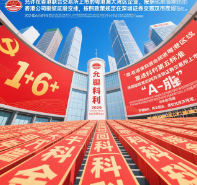
In the same June, the China Securities Regulatory Commission launched the "1+6" reform of the STAR Market, directly igniting enthusiasm for tech companies' return. The reform not only reactivated the fifth set of listing standards for the STAR Market but also expanded its application scope from traditional biomedical fields to cutting-edge tech fields such as AI, commercial aerospace, and low-altitude economy. This move opened a compliant channel for many hard-tech companies with deep tech barriers but no profitability to list on the A-share market.
Policy signals peaked at the Lujiazui Forum in June this year. CSRC Chairman Wu Qing clearly stated, "Support qualified HK-listed companies to list domestically," and added, "Recently, some companies have made such demands; we will support them according to regulations to better promote the coordinated development of the two markets." On the same day, the Shanghai Stock Exchange promptly issued a guidance specifically for AI large model companies on applying the fifth set of STAR Market listing standards, clearly quantifying and defining key criteria such as "evident technical advantages," "stage achievements," and "large market space."
Qi Menglin, Managing Partner at Huashang Law Firm, commented that regulatory support for HK companies returning to A-shares is a key step in deepening the institutional opening of the capital market. This not only introduces a batch of scarce high-quality core assets to the A-share market, enhancing local pricing power, but also promotes interconnectivity between the two markets in valuation systems, information disclosure, and regulatory rules through the "A+H" dual-platform architecture. This "mutual drive" injects vitality into the A-share market while effectively consolidating Hong Kong's status as an international financial center and boosting the internationalization of the RMB.
III. Opportunities and Challenges Coexist: Prudent Choices Under High Valuation Attraction
Another core driving force behind HK companies returning to A-shares is the significant "AH share premium." According to Wind data, as of the close on July 14, the Hang Seng "AH Share Premium" index stood at 124.5, meaning that for companies dual-listed on both A-shares and H-shares, A-share prices are on average about 24.5% higher than H-share prices. Moreover, 116 stocks have A-share premiums over H-shares exceeding 30%. This valuation gap undoubtedly holds enormous appeal for HK companies seeking to boost valuations and expand financing channels.

However, high valuations do not come without costs. Huang Lichong cautioned that the higher valuations in A-shares do not mean H-share shareholders can enjoy the same premium; the spread reflects different market pricing logics. Qi Menglin further pointed out potential challenges for HK companies returning to A-shares:
- High Compliance Costs and Complexity: The "A+H" dual listing model means companies must simultaneously comply with vastly different accounting standards, information disclosure, and corporate governance requirements in both markets. Cross-market compliance costs and processing procedures are extremely complex and time-consuming.
- Double Performance and Valuation Pressure: After becoming an "A+H" stock, the company faces multiplied performance scrutiny and valuation pressure. Especially for unprofitable companies, if short-term R&D results or commercialization progress fall short of expectations, they face huge risks of valuation correction and liquidity dilution in both markets.
Therefore, before deciding to return to A-shares, HK companies must carefully weigh the financing convenience brought by high valuations against potential challenges such as cross-market supervision and performance pressure, making strategic decisions aligned with long-term development.
IV. Trend Outlook: STAR Market Becomes Main Arena, "H-First-A-Follow" Model Normalizes
Wind data clearly show the evolution of the "Hong Kong first, then A-share" model. As of the close on July 14, 201 companies are HK-listed firms with A-shares, of which 101 follow the "Hong Kong first, then A-share" pattern. Since the establishment of the STAR Market in 2019, new cases have concentrated in banks and brokerages, with a significant tilt toward tech fields. The STAR Market, with its high inclusiveness, has become the mainstream path for HK tech companies returning to A-shares, with giants like SMIC, Hua Hong Semiconductor, Times Electric, and BeiGene as successful examples.
Looking ahead, multiple institutions and experts believe that with the implementation of the fifth set of STAR Market standards expansion and the fourth set of differentiated ChiNext standards, the compliant channel for unprofitable hard-tech companies to return is now open. Under the dual effect of clear policy support and improving market mechanisms, the "Hong Kong first, then A-share" model will evolve from individual cases into a normalized trend. More tech firms that have completed initial Hong Kong listings are expected to follow suit, based on local valuation enhancement and long-term financing support needs, forming a new situation of mutual promotion and coordinated development between the A-share and H-share markets.
Cen Zhiyong, analyst at Wutong Research Institute, believes that the return of high-quality tech companies can not only enhance their own valuations but also provide mainland investors with more quality investment targets, achieving a win-win situation for all parties.
Conclusion
The fact that over ten HK-listed companies have refreshed the "return to A-shares" progress bar this year is not an isolated market event but an inevitable outcome of China's deepening reform and opening of its capital market, promoting deep integration of the two markets. It is both a strategic choice of companies under policy support and a natural result of market valuation logic and capital allocation efficiency optimization. As institutional barriers are gradually dismantled and the linkage between the two markets tightens, a new capital market ecosystem driven by tech innovation and coordinated development of A-shares and H-shares is rapidly forming. For companies, how to find their position in this wave and carefully weigh opportunities and risks will be key to successfully achieving a "second leap."