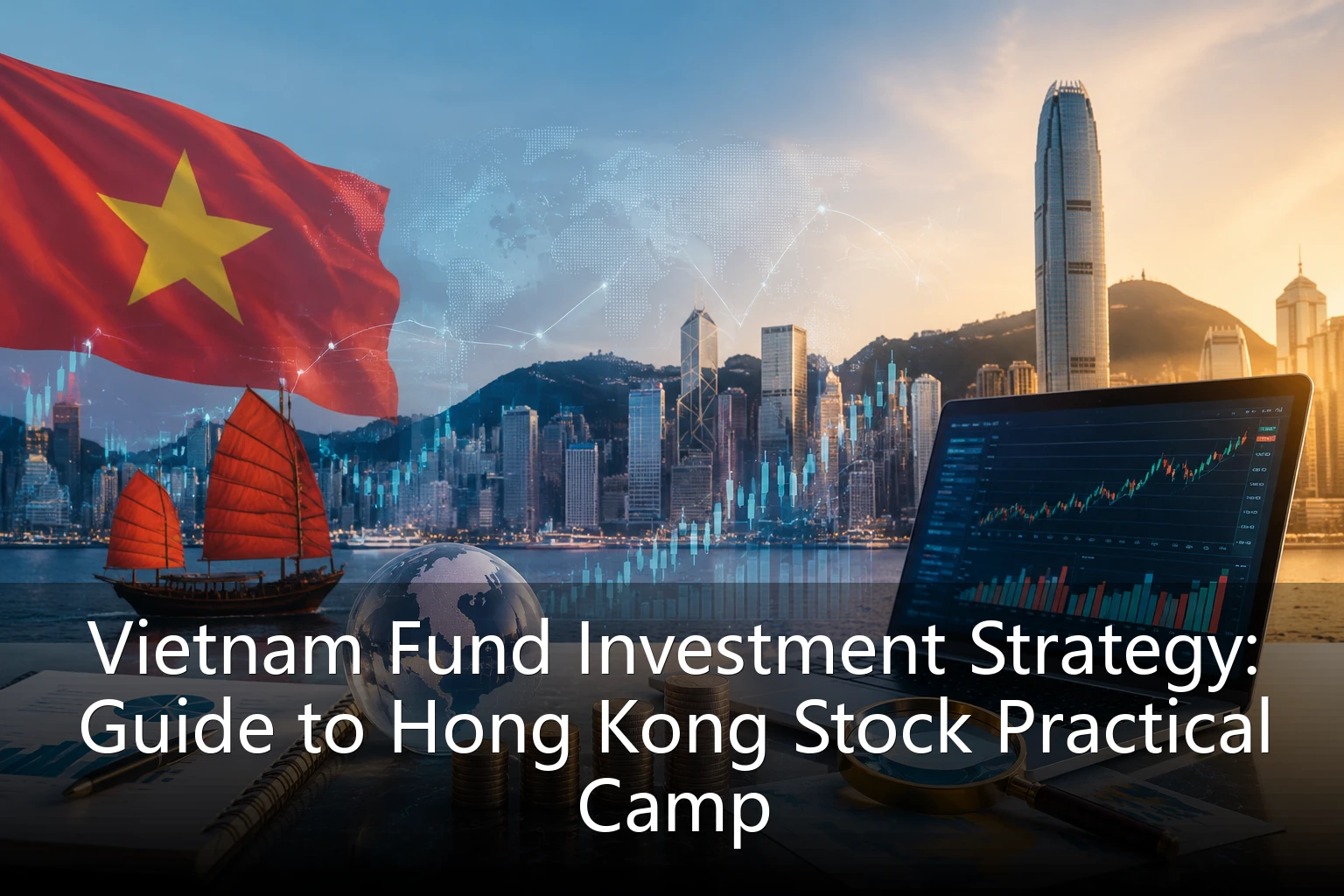
As global investment hotspots shift, Vietnam, as an emerging market in Southeast Asia, is attracting more and more investors' attention. Especially through Hong Kong stock platforms, investors can conveniently participate in Vietnam fund investment. This article will focus on Vietnam fund investment strategies, comprehensively analyzing how to seize investment opportunities in the Vietnam market from basic knowledge, core concepts, common misconceptions to applicable scenarios. Whether you are a novice or an experienced investor, you can gain practical insights from it to help you make wise decisions in the Hong Kong Stock Practical Camp.
I. Basic Knowledge: What are Vietnam Funds?
Vietnam funds are funds that mainly invest in the Vietnam securities market, usually including stock funds, bond funds, and hybrid funds. These funds provide investors with opportunities to diversify risks and share the dividends of Vietnam's economic growth by investing in Vietnamese listed companies, government bonds, or corporate bonds. Compared with direct investment in Vietnamese stocks, fund investment has the advantages of professional management, high liquidity, and low thresholds, especially suitable for investors who hope to position in the Vietnam market through Hong Kong stock platforms.
1. Main Types
- Stock Funds: Mainly invest in listed company stocks of the Vietnam Stock Exchange (HOSE), such as leading enterprises in manufacturing, technology, and consumer industries. These funds have higher risks but also greater potential returns.
- Bond Funds: Invest in Vietnamese government bonds or corporate bonds, providing relatively stable returns, suitable for investors with lower risk appetite.
- Hybrid Funds: Invest in both stocks and bonds simultaneously, balancing risk and return, suitable for investors with moderate risk appetite.
2. Operation Mechanism
Vietnam funds are managed by professional fund managers who adjust investment portfolios based on market analysis. Investors indirectly hold Vietnamese assets by purchasing fund shares and enjoy returns from professional management. The net asset value of the fund fluctuates with the market, and investors can subscribe or redeem at any time, with good liquidity.
II. Core Concepts: Vietnam's Economic Background and Investment Opportunities
To understand Vietnam fund investment, one must first grasp Vietnam's economic fundamentals. Vietnam's economy has performed impressively in recent years, becoming one of the world's fastest-growing economies, mainly due to demographic dividends, FDI inflows, and manufacturing upgrades.
1. Economic Growth and Demographic Dividends
Vietnam has a young and growing population, with abundant and low-cost labor, which provides strong momentum for the manufacturing and consumer markets. According to Vietnam's quarterly GDP data (id:557), Vietnam's GDP grew by 5.1% year-on-year in 2023, and is expected to maintain steady growth in 2024. Demographic dividends not only support manufacturing expansion but also drive consumption upgrading, providing broad space for fund investment.
2. FDI Inflows and Industrial Upgrading
Vietnam is a popular destination for FDI, especially in manufacturing and technology industries. Vietnam FDI Inflow Tracking (id:560) shows that actual FDI到位资金 reached $22 billion in 2023, mainly from electronics, automotive, and textile industries. These foreign enterprises not only bring capital but also promote technology transfer and industrial chain upgrading, enhancing the competitiveness of Vietnamese enterprises and providing high-quality targets for stock fund investment.
3. Digital Economy and Consumption Upgrading
Vietnam's digital economy (id:544) is developing rapidly, with increasing internet penetration and mobile payment usage. At the same time, the trend of Vietnam's consumption upgrading (id:534) is obvious, and the growth of the middle class drives the growth of retail, tourism, and entertainment industries. Fund investment can focus on these high-growth areas to capture long-term value.
III. Common Misconceptions: Misunderstanding the Vietnam Market
Many investors have misunderstandings about the Vietnam market, leading to decision-making errors. Here are common misconceptions and clarifications:
1. Misconception 1: The Vietnam market is too risky and not suitable for investment
Although the Vietnam market is more volatile, risks can be reduced through fund diversification. Moreover, Vietnam's economic fundamentals are sound, with strong policy support, and significant long-term investment potential. The key is to choose professionally managed funds rather than investing in individual stocks directly.
2. Misconception 2: Poor liquidity, difficult to exit
In fact, Vietnam funds are traded through Hong Kong stock platforms, with good liquidity. Investors can subscribe or redeem at any time without worrying about market liquidity issues. Compared with direct investment in Vietnamese stocks, funds provide a more convenient exit channel.
3. Misconception 3: Only suitable for short-term speculation
Vietnam funds are more suitable for long-term investment. Short-term market fluctuations may be large, but in the long run, economic growth and industrial upgrading will drive asset appreciation. Investors should formulate long-term strategies and avoid frequent trading.
IV. Applicable Scenarios: When to Invest in Vietnam Funds?
Vietnam fund investment is applicable to various scenarios, but it needs to be combined with market timing and personal goals:
1. Market Timing
- Economic Recovery Period: When clear signals of Vietnam's economic recovery (id:550) appear, such as accelerated GDP growth and increased FDI inflows, it is a good time to invest.
- Policy Favorable: When Vietnam's fiscal policy (id:508) and monetary policy (id:561) are loose, such as interest rate cuts or tax reductions, it can stimulate the market and improve fund performance.
2. Investment Goals
- Long-term Appreciation: Suitable for investors who hope to share the long-term economic growth dividends of Vietnam, and can allocate to stock funds or hybrid funds.
- Stable Income: Investors with low risk appetite can choose bond funds to obtain fixed income.
3. Risk Management
Investors should diversify their investments and avoid concentrating on a single fund. At the same time, regularly evaluate fund performance and adjust the portfolio according to market changes. For example, when economic uncertainty increases, the proportion of bond funds can be increased.
V. Practical Suggestions: How to Invest in Vietnam Funds through Hong Kong Stocks?
The Hong Kong Stock Practical Camp provides investors with a convenient channel for Vietnam fund investment. Here are the specific steps:
1. Choose a Platform
Through Hong Kong stock brokers or online platforms such as Futubull, Tiger Brokers, etc., search for Vietnam fund products. Ensure the platform supports Vietnam fund trading and check information such as fees and liquidity.
2. Screen Funds
- Performance: Check historical returns and choose funds with stable long-term performance.
- Fund Manager: Understand the background and investment strategy of the fund manager, and choose an experienced team.
- Fee Structure: Compare management fees, custody fees, etc., and choose funds with reasonable costs.
3. Investment Strategy
- Dollar-Cost Averaging: Regular fixed-amount investment to reduce the impact of market fluctuations, suitable for long-term investors.
- Portfolio Allocation: Combine stock funds, bond funds, and hybrid funds to diversify risks.
4. Monitoring and Adjustment
Regularly monitor fund performance, pay attention to Vietnam's economic data (such as GDP, CPI) and macro policy changes. Adjust the investment portfolio according to market dynamics. For example, when Vietnam's economic growth forecast (id:545) is lowered, the allocation to stock funds can be reduced.
VI. Conclusion: Seize the Investment Opportunities of Vietnam Funds
Vietnam fund investment is an opportunity that cannot be ignored in the Hong Kong Stock Practical Camp. By understanding basic knowledge, core concepts, and common misconceptions, investors can position in the Vietnam market more wisely. The key is to choose professionally managed funds, formulate long-term strategies, and flexibly respond to market changes. As Vietnam's economy continues to recover and industrial upgrading, fund investment will bring considerable returns. Start your Vietnam fund investment journey now and share the growth dividends of this emerging market!