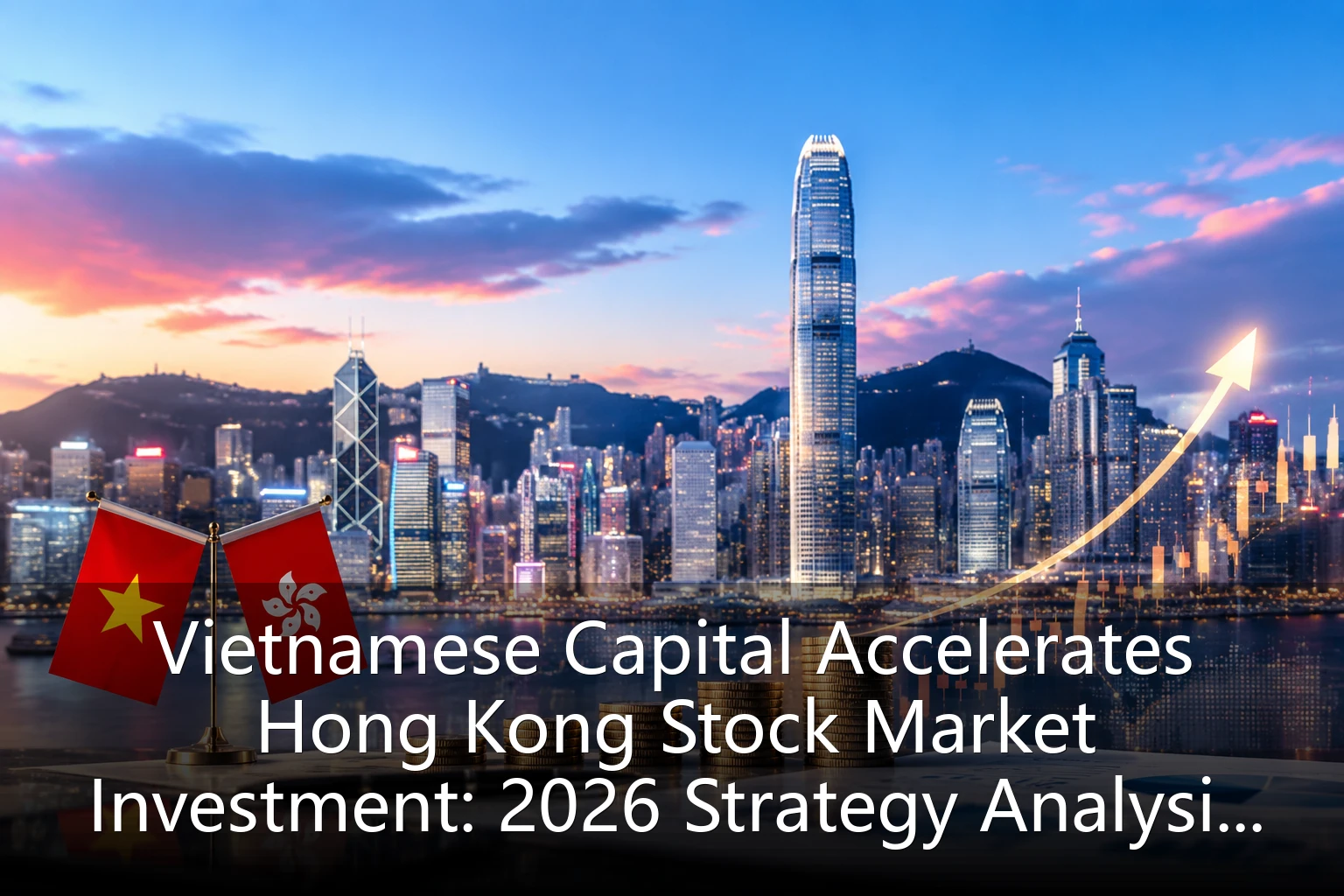
In August 2026, with the continuous development of Vietnam's economy and the gradual opening of its capital market, more and more Vietnamese investors are turning their attention to the Hong Kong stock market. Data shows that in the first half of 2026, the portion of southbound funds from Vietnam increased by more than 30% year-on-year, demonstrating Vietnamese investors' strong interest in the Hong Kong stock market. This article will deeply analyze the motivations behind Vietnam's accelerated capital allocation in Hong Kong stocks, interpret the unique advantages of the Hong Kong stock market, and provide practical investment guidance for Vietnamese investors.
Basic Situation and Characteristics of the Hong Kong Stock Market
As an important financial center in Asia, Hong Kong's stock market has a long history and mature market mechanisms. The Hong Kong stock market is known for its high degree of internationalization, flexible trading mechanisms, and transparent information disclosure. As of August 2026, the total market capitalization of the Hong Kong stock market exceeds 40 trillion Hong Kong dollars, ranking among the top globally. Compared with the Vietnamese stock market, the Hong Kong stock market has more international companies, a more complete regulatory system, and a richer variety of investment products.
Analysis of Reasons Why Vietnamese Investors Choose Hong Kong Stocks
Vietnamese investors are accelerating their allocation to the Hong Kong stock market mainly based on the following considerations:
1. Diversified Investment Needs
With the development of Vietnam's economy, high-net-worth individuals and enterprises have accumulated significant wealth, seeking more diversified investment channels to diversify risks. The domestic market capacity in Vietnam is relatively limited with limited investment choices, while the Hong Kong stock market provides a broader investment space.
2. Valuation Advantages of Hong Kong Stocks
Compared to the Vietnamese stock market, the Hong Kong stock market has lower overall valuations, especially for some quality Chinese stocks and Hong Kong local stocks, which have high investment value. Among major global stock markets, Hong Kong valuations are at relatively low levels, providing good entry opportunities for long-term investors.
3. High Degree of Internationalization
The Hong Kong stock market has attracted a large number of international companies to list, providing Vietnamese investors with opportunities to access high-quality global enterprises. Many multinational companies choose to list in Hong Kong, making it convenient for Vietnamese investors to invest in these internationally renowned companies.
4. Flexible Trading Mechanisms
The Hong Kong stock market implements a T+0 trading mechanism without price limit circuits, making trading more flexible and efficient. This trading mechanism is more suitable for experienced investors to conduct short-term operations and risk management.
5. Currency Advantages
For Vietnamese investors holding US dollars, the Hong Kong stock market provides opportunities to directly invest in US dollar assets. The Hong Kong dollar is pegged to the US dollar, providing investors with a relatively stable currency environment.
Advantages and Risks of Hong Kong Stock Investment
Investment Advantages
- High Market Maturity: The Hong Kong stock market has a history of over a hundred years, with complete market mechanisms and sound investor protection mechanisms.
- Rich Investment Products: In addition to stocks, the Hong Kong stock market also provides ETFs, futures, options and other investment products to meet the needs of different investors.
- Tax Advantages: Hong Kong implements a low-tax policy, with lower capital gains tax and dividend tax, which helps improve investment returns.
- Transparent Information Disclosure: Listed companies have strict information disclosure requirements, allowing investors to obtain timely and accurate information to make wise investment decisions.
- Convenient International Capital Flows: Capital inflows and outflows are relatively free, facilitating global asset allocation and risk management.
Investment Risks
- Exchange Rate Risk: Although the Hong Kong dollar is pegged to the US dollar, exchange rate fluctuations between the Vietnamese dong and the US dollar may affect investment returns.
- High Market Volatility: The Hong Kong stock market is significantly affected by international political and economic situations, with higher volatility.
- Regulatory Differences: The regulatory system of the Hong Kong stock market differs from Vietnam's, requiring time to adapt.
- Cultural Differences: The market culture of the Hong Kong stock market differs from Vietnam's, requiring time to adapt.
- Difficulty in Information Acquisition: For Vietnamese investors, obtaining real-time information about the Hong Kong market may be challenging.
How Vietnamese Investors Can Participate in the Hong Kong Stock Market
1. Opening a Hong Kong Stock Account
Vietnamese investors can open Hong Kong stock accounts through Hong Kong brokers or local brokers that provide international services. Currently, more and more international brokers are beginning to value the Vietnamese market, providing services specifically targeted at Vietnamese investors.
2. Choosing Suitable Investment Products
According to your own risk preferences and investment goals, choose suitable stocks, ETFs or other investment products. For beginners, you can consider starting with Hong Kong ETFs to reduce the risk of individual stock selection.
3. Paying Attention to Market Dynamics
Closely monitor the macroeconomic situation in Hong Kong and globally, industry development trends, and changes in company fundamentals. Establish systematic information acquisition channels, including professional financial media, research reports, and investment analysis.
4. Diversified Investment
Do not invest all your funds in a single stock or industry; appropriate diversification should be conducted. You can achieve risk diversification by investing in companies from different industries and market capitalizations, as well as by using derivative instruments.
5. Long-term Investment Perspective
The Hong Kong stock market has high short-term volatility, and investors should establish a long-term investment philosophy, avoiding chasing gains and selling at losses. Research shows that long-term holding of quality stocks usually yields better investment returns.
6. Utilizing Professional Services
Consider hiring professional investment advisors or choosing quality fund products. For investors who do not have enough time and professional knowledge to research the market, professional services can help them make wiser investment decisions.
Conclusion and Outlook
With the continuous development of Vietnam's economy and the gradual opening of its capital market, the trend of Vietnam's accelerated capital allocation in Hong Kong stocks will continue to deepen. According to data from Vietnam's General Statistics Office, Vietnam's GDP growth reached 6.8% in the first half of 2026, exceeding expectations, providing a solid foundation for the capital market. At the same time, the Vietnamese government continues to promote financial reforms and relax capital controls, creating more favorable conditions for investors to participate in international markets.
The Hong Kong stock market, with its mature market mechanisms, rich investment products, and relatively low valuations, provides Vietnamese investors with a high-quality overseas investment channel. However, investors should also fully understand the risks of the Hong Kong stock market and make adequate preparations and plans. In the future, with the deepening of cooperation between the two capital markets and the further broadening of investment channels, Vietnamese investors' participation in the Hong Kong stock market will become more convenient, and Hong Kong stocks will become an important choice for Vietnamese investors' global asset allocation.
For Vietnamese investors, seizing investment opportunities in Hong Kong stocks requires a comprehensive understanding of market characteristics, establishing reasonable investment strategies, and maintaining a long-term investment perspective. Against the background of global asset allocation, the Hong Kong stock market will undoubtedly open a door for Vietnamese investors to the international capital market, helping to preserve and increase wealth.