Vietnamese Fund Capital Accelerates Layout in Hong Kong Stock Market: 2026 Investment Advantages and Practical Guide
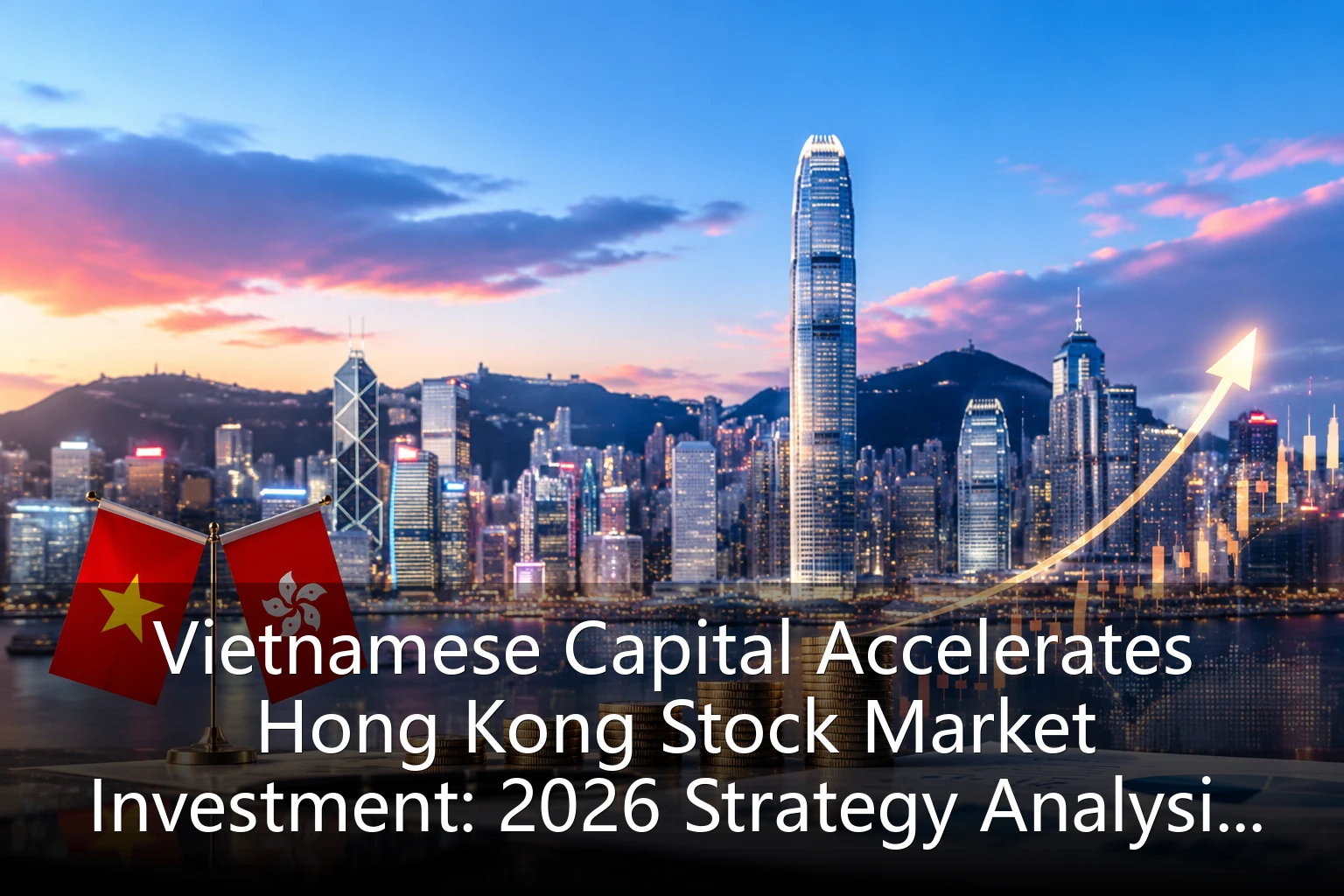
As the global investment landscape continues to evolve, Vietnamese fund capital is accelerating its presence in the Hong Kong stock market. As a major financial center in Asia, the Hong Kong stock market has attracted an increasing number of Vietnamese investors due to its unique advantages. This article will deeply analyze the main advantages, trading characteristics, entry methods, and risk warnings of investing in Hong Kong stocks to help Vietnamese investors better seize investment opportunities.
I. Main Advantages of Investing in Hong Kong Stocks
As a leading international financial center, the Hong Kong stock market possesses multiple investment advantages, making it an important allocation direction for Vietnamese fund capital.
1. High Market Maturity and Complete Regulatory System
The Hong Kong stock market has a development history spanning over 130 years and is one of the world's most mature financial markets. The regulatory system of the Stock Exchange of Hong Kong is sound, information disclosure is comprehensive, and investor protection mechanisms are complete, providing a fair and transparent trading environment for investors. In contrast, the Vietnamese stock market is still in a developmental stage, and its regulatory system and market mechanisms are yet to be perfected.
2. Rich Investment Products and Diverse Choices
The Hong Kong stock market offers a rich variety of investment products, including stocks, bonds, ETFs, futures, and options. Investors can choose suitable investment tools based on their risk appetite and investment goals. Furthermore, the Hong Kong stock market concentrates high-quality enterprises from around the world, covering multiple industries such as technology, finance, consumption, and healthcare, providing investors with a broad range of choices.
3. Clear Valuation Advantages and Prominent Investment Value
Compared to major global stock markets, the Hong Kong stock market is currently in a valuation trough. According to the latest data, the P/E ratio of the Hang Seng Index in Hong Kong is about 10-12 times, which is lower than the approximately 20 times of US stocks and also lower than the average level of A-shares. This valuation advantage provides good entry opportunities for long-term investors.
4. Flexible Trading Mechanism and Convenient Capital Flow
The Hong Kong stock market implements a T+0 trading system, allowing investors to buy and sell stocks on the same day, which improves capital utilization efficiency. Moreover, Hong Kong has no capital controls, allowing capital to flow freely, which is convenient for international investors.
II. Characteristics of Hong Kong Stock Trading
Understanding the trading characteristics of Hong Kong stocks is crucial for Vietnamese investors, as it helps in better formulating investment strategies and risk management plans.
1. Trading Hours and Rules
The trading hours of the Hong Kong stock market are from 9:30 AM to 12:00 PM and 1:00 PM to 4:00 PM, Monday to Friday. Unlike the Vietnamese stock market, Hong Kong stocks do not have daily upper or lower limits, and stock price fluctuations can be significant. Furthermore, Hong Kong implements a T+2 settlement system, meaning that the settlement of funds and stocks is completed two business days after the trade.
2. Composition of Trading Costs
Trading costs in Hong Kong stocks mainly include commissions, transaction fees, brokerage fees, and stamp duty. The commission is generally 0.25%-0.5% of the transaction amount, with a minimum charge of approximately HKD 100; the stamp duty is 0.1% of the transaction amount, with amounts less than HKD 1 charged as HKD 1. Investors should consider trading costs and service quality when choosing a broker.
3. Trading Units and Quotation
The trading unit for Hong Kong stocks is a "lot," and the number of shares per lot varies by company, ranging from 100 to 10,000 shares. The Stock Exchange of Hong Kong recently reduced the minimum quotation unit for stocks by 50%, improving trading efficiency and lowering transaction costs.
4. Currency Risk
Since Hong Kong stocks are priced in Hong Kong Dollars (HKD), and Vietnamese investors typically invest using Vietnamese Dong (VND), the impact of exchange rate fluctuations on investment returns must be considered. Investors can hedge currency risk using foreign exchange derivative instruments or by choosing Hong Kong stock ETFs denominated in USD.
III. Methods for Vietnamese Investors to Access the Hong Kong Stock Market
For Vietnamese investors, there are multiple channels to enter the Hong Kong stock market, each with its own characteristics and target audience.
1. Investing through Stock Connect
Stock Connect is part of the mechanism connecting the mainland and Hong Kong stock markets, allowing mainland investors to buy and sell Hong Kong stocks through mainland brokers. Although Vietnam is not directly involved in the Stock Connect mechanism, Vietnamese investors can invest in Hong Kong stocks by opening a securities account in Hong Kong. Hong Kong brokers generally have relatively relaxed requirements for international investors and often provide multilingual services.
2. Investing in Hong Kong Stock ETFs
ETFs (Exchange-Traded Funds) are a convenient investment tool, allowing investors to indirectly invest in the Hong Kong stock market by purchasing Hong Kong stock ETFs. Hong Kong stock ETFs track specific indices or sectors, such as Hang Seng Index ETFs, Hang Seng China Enterprises Index ETFs, and Technology Sector ETFs. ETFs have advantages such as low transaction costs, high liquidity, and risk diversification, making them suitable for novice investors.
3. Choosing a Suitable Broker
For Vietnamese investors who invest directly in Hong Kong stocks, selecting a reliable broker is crucial. Investors should consider factors such as the broker's qualifications, trading platform, transaction costs, research services, and customer support. Currently, several international brokers have branches in Vietnam, offering exclusive services tailored for Vietnamese investors.
4. Opening a Securities Account
Vietnamese investors opening a securities account in Hong Kong need to provide documents such as proof of identity and proof of address, and some brokers may require a minimum asset threshold. The account opening process usually involves online application, document verification, and video verification, which can take 1-2 weeks.
IV. Risk Warnings for Hong Kong Stock Investment
Despite the many advantages of the Hong Kong stock market, investors must fully recognize the potential risks and manage them appropriately.
1. Market Volatility Risk
The Hong Kong stock market is highly volatile, influenced by various factors such as international political and economic situations, US-China relations, and local Hong Kong policies. Investors should conduct asset allocation and not invest all their capital in the Hong Kong stock market.
2. Currency Risk
As mentioned before, Vietnamese investors face currency fluctuation risk when investing in Hong Kong stocks. Fluctuations in the exchange rate between the VND and HKD can affect the actual return on investment. Investors can mitigate currency risk through foreign exchange hedging tools or by choosing USD-denominated products.
3. Policy Risk
As a Special Administrative Region, Hong Kong's policy environment may change, such as tax policies or financial regulatory policies, and these changes can affect the stock market. Investors should closely monitor policy trends and adjust their investment strategies in a timely manner.
4. Information Asymmetry Risk For international investors, obtaining comprehensive information on Hong Kong listed companies can be challenging. Investors should fully utilize research reports from securities firms and pay attention to company financial statements and announcements to make rational investment decisions.
V. Investment Opportunities in Hong Kong Stocks under the Current Market Environment
In August 2026, the Hong Kong stock market presents specific investment opportunities due to the combined effects of the global economic landscape and local Hong Kong factors.
1. High Dividend Value Stocks
Influenced by the global interest rate environment, high dividend value stocks are favored by investors. The Hong Kong market has numerous high-dividend stocks in sectors such as finance, real estate, and utilities, with dividend yields generally between 4% and 6%, providing stable cash flow returns to investors.
2. Technology Innovation Enterprises
In recent years, Hong Kong has actively attracted technology innovation enterprises to list, such as companies with dual-class shares and second-listed companies. These enterprises are mostly in the growth stage and have high growth potential, making them suitable for investors with high risk tolerance.
3. High-Quality Mainland Chinese Enterprises
Many high-quality enterprises from mainland China choose to list in Hong Kong. These companies benefit from the sustained growth of the Chinese economy and possess high investment value. Vietnamese investors can share in the dividends of China's economic growth by investing in these China-concept stocks listed in Hong Kong.
4. New Energy and Green Finance
Against the backdrop of global carbon neutrality, the new energy and green finance sectors have long-term growth potential. As an international financial center, Hong Kong is actively developing green finance, and related companies and investment opportunities are worth paying attention to.
VI. Conclusion: Rational Investment and Long-Term Planning
For Vietnamese fund capital, the Hong Kong stock market offers diversified investment opportunities. Investors should fully understand the characteristics and risks of the Hong Kong stock market and formulate reasonable investment strategies based on their own risk tolerance and investment objectives. Against the backdrop of changes in the global economic landscape, the Hong Kong stock market, as an important bridge connecting mainland China and international markets, will continue to play its unique investment value.
It is worth noting that investing involves risks, and market entry requires caution. Before investing in Hong Kong stocks, Vietnamese investors should fully understand the relevant laws and regulations, choose appropriate investment channels, and manage risks to preserve and increase their assets.