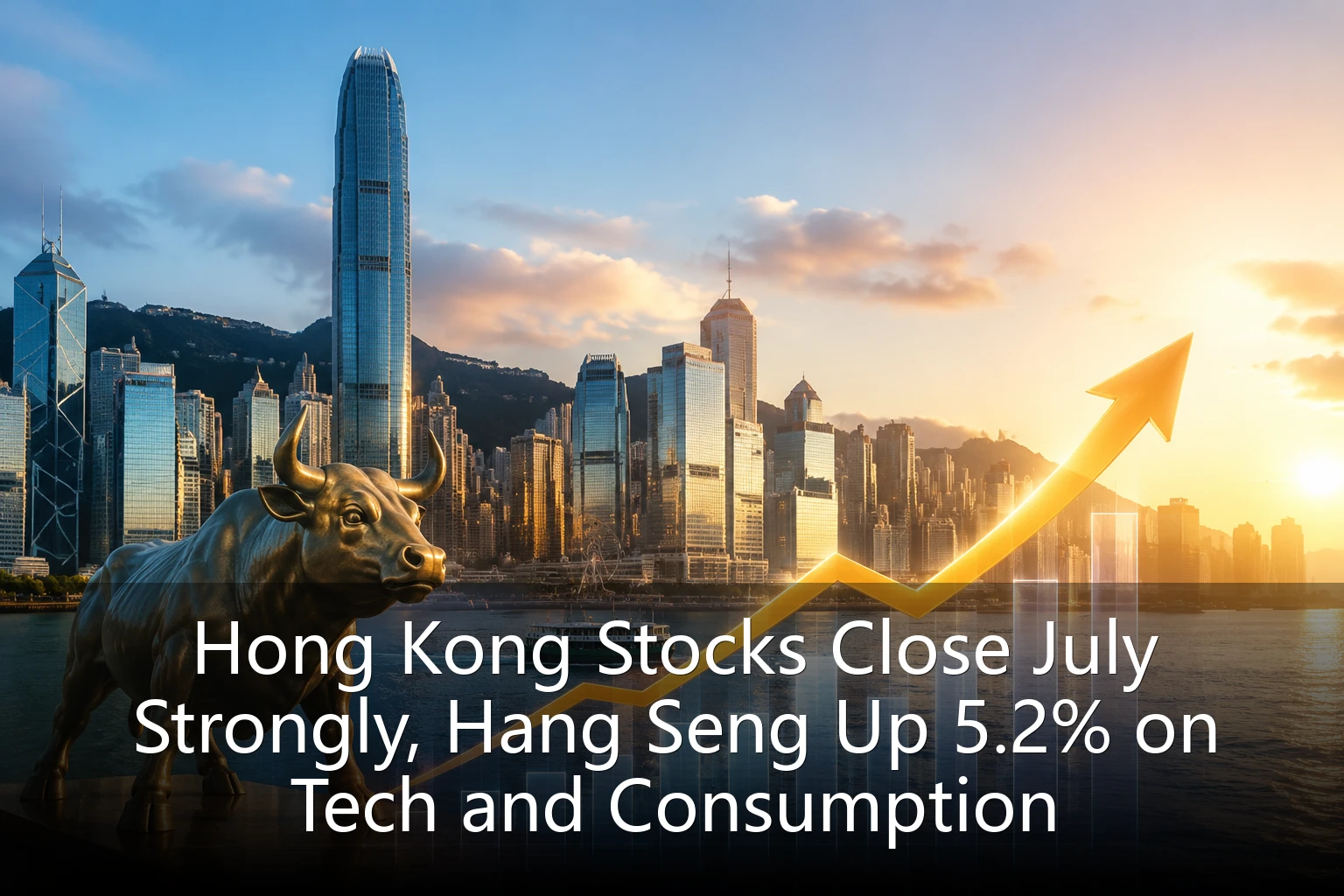
On July 31, 2026, Hong Kong stocks closed the month on a strong note. The Hang Seng Index ended the day at 23,500 points, up 5.2% for the month, its biggest monthly gain this year. Tech and consumer sectors served as the twin engines of this month's rally, with southbound capital net inflows surpassing HK$80 billion in a single month, significantly boosting market sentiment.
July Review: Tech and Consumer Lead, Broad-Based Gains
Throughout July, the Hang Seng Index climbed from 22,335 points at the start of the month to close at 23,500, a monthly gain of 5.2%. The H-share Index rose 4.8% for the month, while the Hang Seng Tech Index surged 8.6%, delivering standout performance. By sector, tech and consumer stocks were the absolute mainstays.
- Tech sector: Benefiting from the rollout of AI applications and the normalization of platform economy regulation, leading internet stocks rallied collectively. Tencent, Alibaba, and Meituan each gained over 8% for the month, driving the Hang Seng Tech Index to the forefront.
- Consumer sector: Mainland summer consumption data beat expectations, with strong earnings previews from catering, tourism, and retail leaders. Anta Sports, Li Ning, and Haidilao posted double-digit gains.
- Other highlights: The new energy vehicle supply chain and pharmaceutical/biotech sectors also showed periodic strength, while financials and property were relatively subdued, indicating that funds favored high-growth tracks.
Southbound Capital Accelerates Inflows, Mainland Pricing Power Strengthens
This month, southbound capital recorded cumulative net inflows of approximately HK$82 billion, marking the third consecutive month with net inflows exceeding HK$50 billion. In terms of trading targets, tech leaders, high-dividend bank stocks, and new energy champions were the main directions of southbound buying.
Analysts noted that with mainland interest rates trending lower, the valuation advantage of quality Hong Kong stocks has become more prominent. Combined with the expanded Stock Connect universe offering more options, southbound capital has become the most important marginal incremental fund in the Hong Kong market. As of the end of July, southbound capital's share of Hong Kong market capitalization had risen above 12%, significantly enhancing its pricing influence over certain stocks.
Driver Analysis: Triple Resonance Boosts Hong Kong Stocks
Policy: Mainland Pro-Growth Measures Intensify
In July, the Politburo meeting sent a positive signal, emphasizing "consolidating the foundation for economic recovery and improvement," and introduced a series of measures to support the private economy and boost consumption. Market expectations for economic recovery in the second half of the year warmed, lifting the earnings outlook for Hong Kong stocks.
Fundamentals: Interim Earnings Previews Frequently Beat Expectations
July was also the peak period for Hong Kong interim earnings preview disclosures. By the end of the month, over 250 Hong Kong-listed companies had released earnings previews, with roughly 60% positive. Profit growth in tech, consumer, and pharmaceutical sectors was particularly impressive. Improved earnings provided solid support for share price gains.
Liquidity: Global Easing Expectations Strengthen
The Fed kept interest rates unchanged at its July meeting and hinted at a possible rate-cutting cycle beginning in September. A weaker dollar and falling Treasury yields were favorable for Hong Kong stocks and other emerging market assets. Meanwhile, the renminbi exchange rate stabilized and rebounded, boosting foreign investors' confidence in allocating to renminbi-denominated assets.
Outlook: Interim Results Season in Focus, Risks Remain
Looking ahead to August, Hong Kong stocks will enter a period of intensive interim earnings releases, and companies beating expectations are likely to continue attracting fund favor. Many institutions forecast that the Hang Seng Index may challenge the 24,000-point mark on earnings momentum.
However, the market is not without risks. The pace of Fed rate cuts carries uncertainty, and a rebound in inflation data could trigger market volatility. In addition, geopolitical risks, fluctuations in international oil prices, and tail risks in the mainland property sector may also disrupt Hong Kong stocks. Investors should remain rational and manage positions prudently.
Overall, after the strong rally in July, market confidence in Hong Kong stocks has clearly recovered. Against the backdrop of earnings growth and improving liquidity, the medium-to-long-term allocation value of Hong Kong stocks remains prominent. Investors are advised to focus on sectors with strong earnings certainty, such as tech, consumer, and high-dividend stocks, while staying alert to structural opportunities driven by policy catalysts.