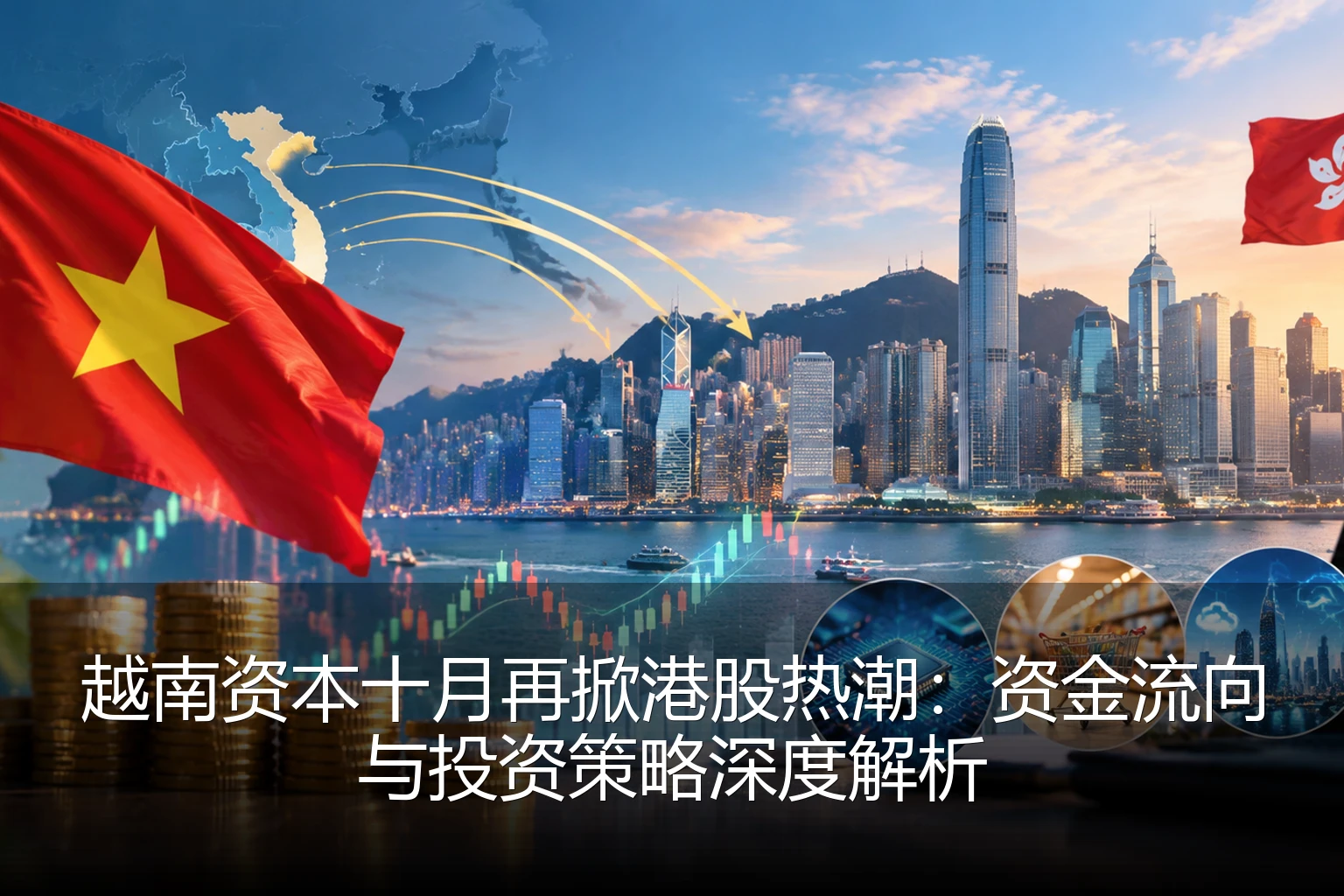
Hong Kong Stocks Reignite Vietnamese Capital Fever in October: In-depth Analysis of Fund Flows and Investment Strategies
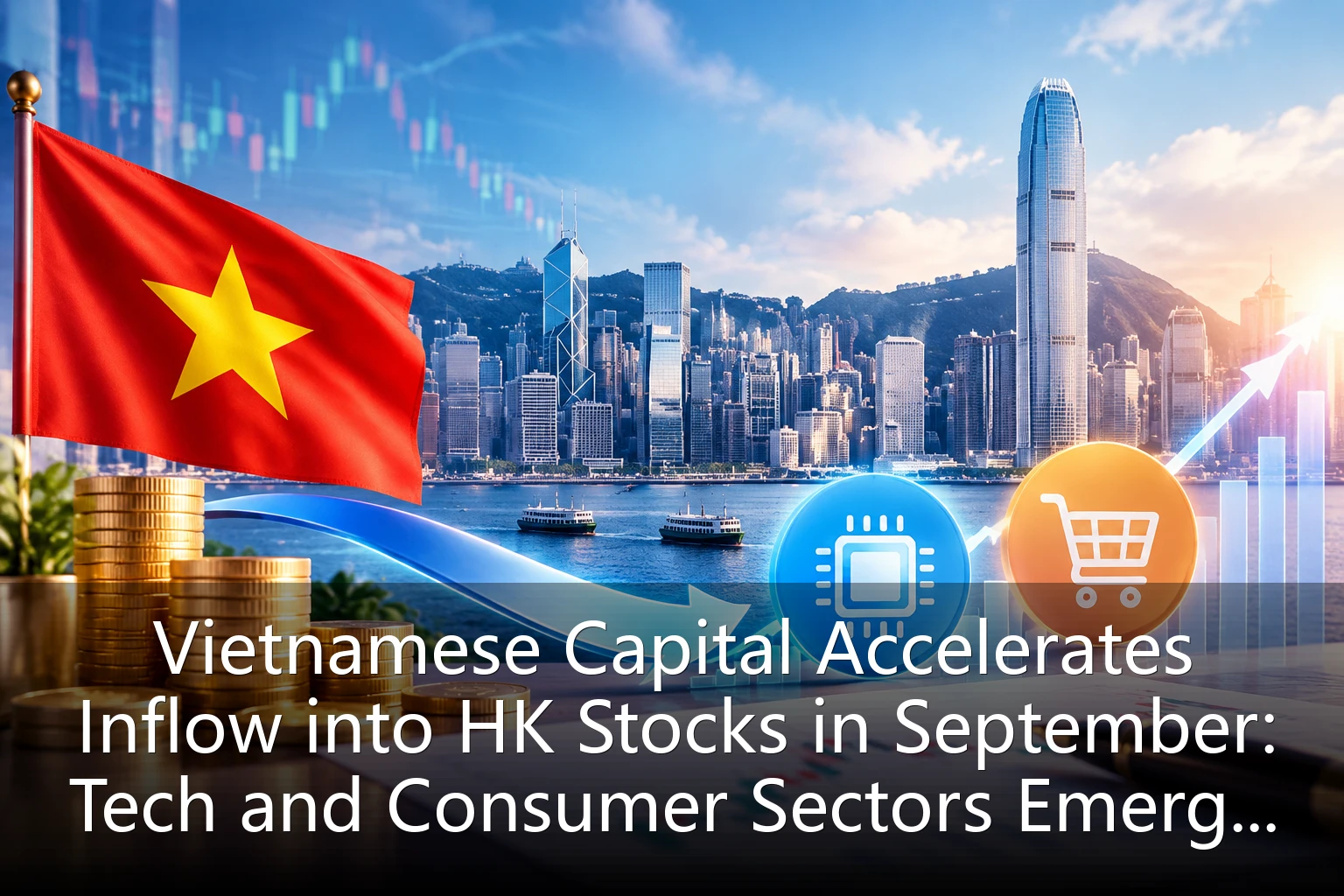
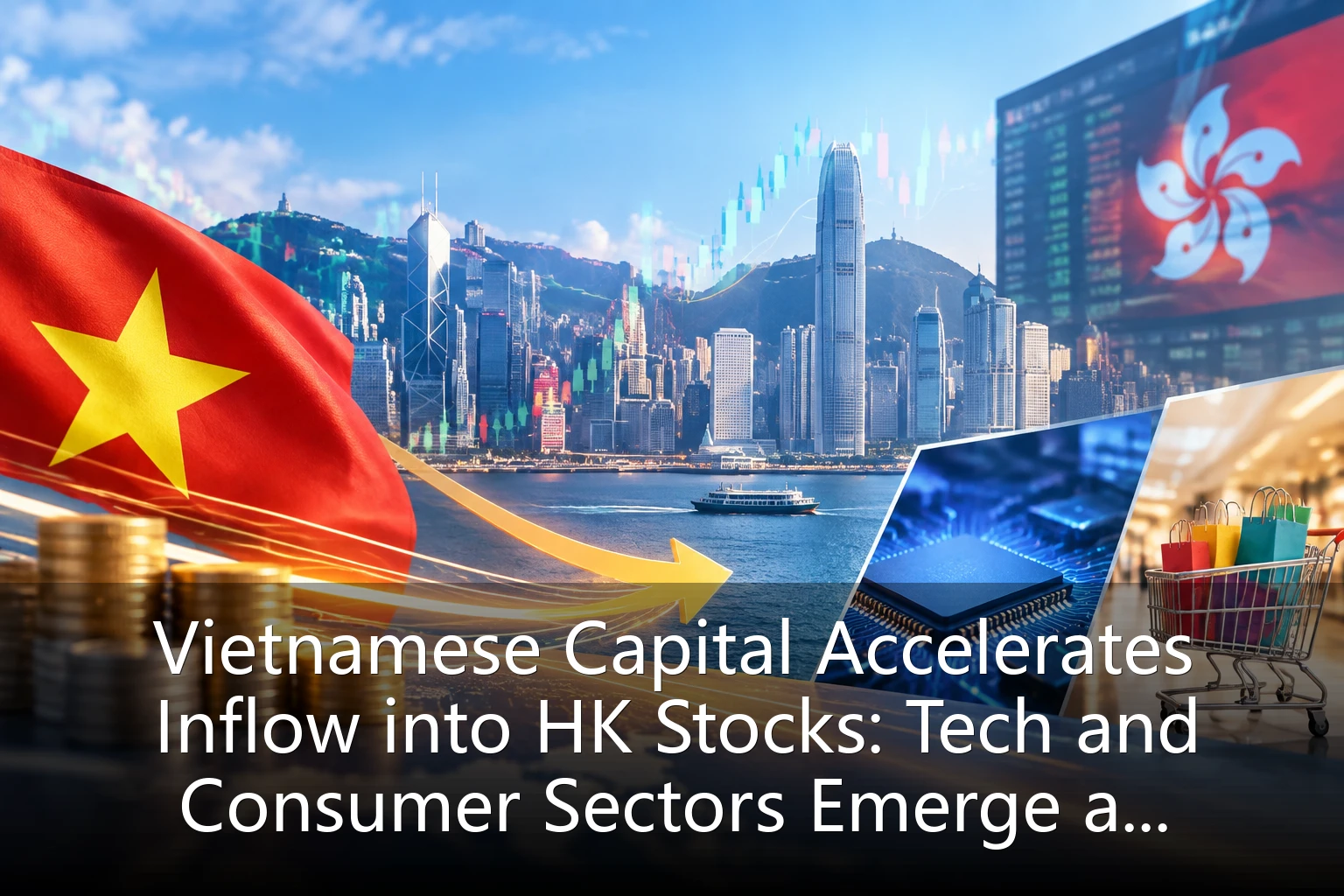
In early October 2026, the Hong Kong stock market once again became a focus for Vietnamese capital. Amid adjustments in the global economic landscape and fluctuations in the mainland Chinese capital market, Vietnamese investors are accelerating their deployment into the Hong Kong stock market, seeking higher returns. After a volatile adjustment in September, the Hang Seng Index stabilized and recovered in early October, with the technology and consumer sectors emerging as hot spots for capital pursuit. This article will deeply analyze the driving factors behind Vietnamese capital flows, explore the investment value of the Hong Kong stock market, and provide professional allocation strategies for investors.
New Trend in Vietnamese Capital Flows: Hong Kong Becomes a "Safe Haven" for Southeast Asian Funds
According to the latest monitoring data from VietFund Asia, net capital inflow into the Hong Kong stock market reached a record $8.5 billion in September 2026, a 23% increase from August, marking the fourth consecutive month of net inflow. This data indicates that against the backdrop of increasing stock market volatility in Southeast Asia, Hong Kong is becoming a significant "safe haven" for capital from Southeast Asian countries like Vietnam, thanks to its unique institutional advantages and international characteristics.
Multiple factors drive the accelerated inflow of Vietnamese capital into Hong Kong stocks. First, as an international financial center, Hong Kong possesses a mature regulatory system and transparent market rules, providing a relatively secure investment environment for overseas investors. Second, the valuation of the Hong Kong stock market is at a relatively low historical level, and many high-quality Hong Kong stocks offer a clear valuation advantage, especially compared to the local Vietnamese market. Furthermore, the Stock Exchange of Hong Kong has continuously optimized its trading mechanisms in recent years, including lowering trading barriers and introducing more derivatives tools, thereby enhancing market liquidity and attractiveness.
It is worth noting that the inflow of Vietnamese capital into Hong Kong is not a simple "bottom-fishing" behavior, but rather an endorsement of the long-term value of the Hong Kong market. Analysts at VietFund Asia state: "Vietnamese investors are shifting from short-term speculation to long-term value investing; they are more concerned with the fundamentals and long-term growth potential of companies rather than short-term market fluctuations. This shift in investment philosophy has provided more stable capital support to high-quality enterprises in the Hong Kong stock market."
Hang Seng Stabilizes Amid Volatility: Technology and Consumer Sectors Become Favorites
Since entering October, the Hang Seng Index has stabilized within the 22,500 to 23,000 point range, and market sentiment has gradually recovered. In terms of sector performance, the technology and consumer sectors have become key areas for Vietnamese capital allocation. The technology sector benefits from the prospects of global artificial intelligence and the digital economy, while the consumer sector benefits from the trend of economic recovery and consumption upgrading in mainland China.
In the technology sector, Vietnamese capital mainly focuses on leading enterprises in areas such as artificial intelligence, cloud computing, and semiconductors. These companies not only possess strong technological capabilities but also have stable cash flows and high growth potential. Taking a leading AI company as an example, it received a joint increase in holdings from three large Vietnamese funds in September, with an increase exceeding $1 billion. A technology industry analyst at VietFund Asia points out: "Vietnamese investors are optimistic about the long-term development prospects of Chinese technology companies, especially their leading position in artificial intelligence. They believe these companies will benefit from the global digital economy wave and achieve sustained growth."
In the consumer sector, Vietnamese capital focuses more on leading enterprises in brand consumer goods, new retail, and catering. These companies benefit from the upgrading and expansion of the Chinese consumer market, possessing stable profitability and strong risk resistance. Data shows that in the third quarter of 2026, the proportion of Vietnamese capital allocated to the Hong Kong stock consumer sector increased by 5 percentage points from the second quarter, reaching 28% of the total allocation. Besides the technology and consumer sectors, Vietnamese capital also pays attention to sectors such as finance and healthcare. These sectors have stable dividend policies and strong defensive characteristics, making them suitable for long-term allocation. A director of Asian Investment Strategy at VietFund stated, "Vietnamese capital is building a diversified Hong Kong stock portfolio that pursues high growth while focusing on risk control. This balanced investment strategy allows them to maintain relatively stable returns amid market fluctuations."Highlighting the Investment Value of Hong Kong Stocks: The Allocation Logic of Vietnamese Capital
The accelerated inflow of Vietnamese capital into the Hong Kong stock market reflects a deep recognition of the investment value of Hong Kong stocks. From a valuation perspective, the overall Price-to-Earnings ratio of the Hong Kong stock market is currently around 11 times, which is at a relatively low historical level, and many high-quality Hong Kong stocks have a clear valuation advantage compared to the local Vietnamese market. From a liquidity perspective, the daily turnover of the Hong Kong stock market exceeds HKD 100 billion, ensuring sufficient liquidity for large capital inflows and outflows. Furthermore, the Stock Exchange of Hong Kong is interconnected with major global markets, providing investors with diversified investment channels. In addition, the Hong Kong stock market possesses comprehensive derivative tools, such as stock index futures and options, offering risk management tools to investors. From an enterprise quality perspective, the Hong Kong stock market concentrates a large number of high-quality enterprises from mainland China and globally, including tech giants like Tencent, Alibaba, and Meituan, as well as financial leaders such as China Mobile and ICBC. These companies have strong profitability and growth potential, making them excellent targets for long-term investment. The logic behind Vietnamese capital allocating to Hong Kong stocks can be summarized as "low valuation, high growth, strong liquidity." An analyst of Asian Investment Strategy at VietFund stated, "Vietnamese investors are looking for high-quality enterprises with reasonable valuations, strong growth, and good liquidity, and the Hong Kong stock market provides such investment opportunities. They believe that by holding these high-quality enterprises for the long term, they can achieve stable investment returns."Investment Strategy: Grasping the Hong Kong Stock Allocation Window
For Vietnamese investors, how to seize the allocation window of the Hong Kong stock market is an important topic. Based on the current market environment, VietFund Asia proposes the following investment strategy suggestions:- Sector Allocation: Balanced Allocation of Technology and Consumer - The technology and consumer sectors are the focus of Vietnamese capital allocation currently. Investors can achieve a balanced allocation between these two sectors according to their risk appetite. Investors with high risk tolerance can appropriately increase the allocation proportion of the technology sector; investors with low risk tolerance can appropriately increase the allocation proportion of the consumer sector.
Future Outlook: Investment Opportunities and Challenges in the Hong Kong Stock Market
Looking ahead, the Hong Kong stock market will continue to face numerous opportunities and challenges. From an opportunity perspective, as the mainland Chinese economy continues to recover and consumption upgrades, high-quality Chinese enterprises listed in Hong Kong will benefit from this trend, achieving performance growth. Moreover, Hong Kong's status as an international financial center will be further enhanced, attracting more international capital inflow. In addition, the Stock Exchange of Hong Kong will continue to optimize market mechanisms, improving market attractiveness and competitiveness.
From a challenge perspective, factors such as the global economic slowdown, geopolitical risks, and uncertainty in US-China relations may have some impact on the Hong Kong stock market. Furthermore, the inherent high volatility of the Hong Kong stock market places high demands on investors' risk tolerance.
For Vietnamese investors, seizing investment opportunities in the Hong Kong stock market requires professional investment knowledge and rich market experience. VietFund Asia advises investors: "Before investing in the Hong Kong stock market, you should fully understand the market characteristics and risks, formulate a reasonable investment strategy, and maintain a rational investment mindset. Furthermore, you can leverage the strength of professional investment advisors and research institutions to enhance the scientificity and accuracy of investment decisions."
In summary, in October 2026, Vietnamese capital is accelerating into the Hong Kong stock market, seeking higher investment returns. The Hang Seng Index has stabilized amidst fluctuations, with the technology and consumer sectors becoming popular targets for capital. For Vietnamese investors, grasping the allocation window in the Hong Kong stock market requires a deep understanding of market characteristics, formulating a reasonable investment strategy, and maintaining a long-term investment perspective. Only investors with professional knowledge and a rational mindset can achieve stable returns in the Hong Kong stock market, where opportunities and challenges coexist.