Accelerated Vietnam Capital Allocation to HK Stock Market: Analysis of Market Dynamics and Investment Strategies for August 2026
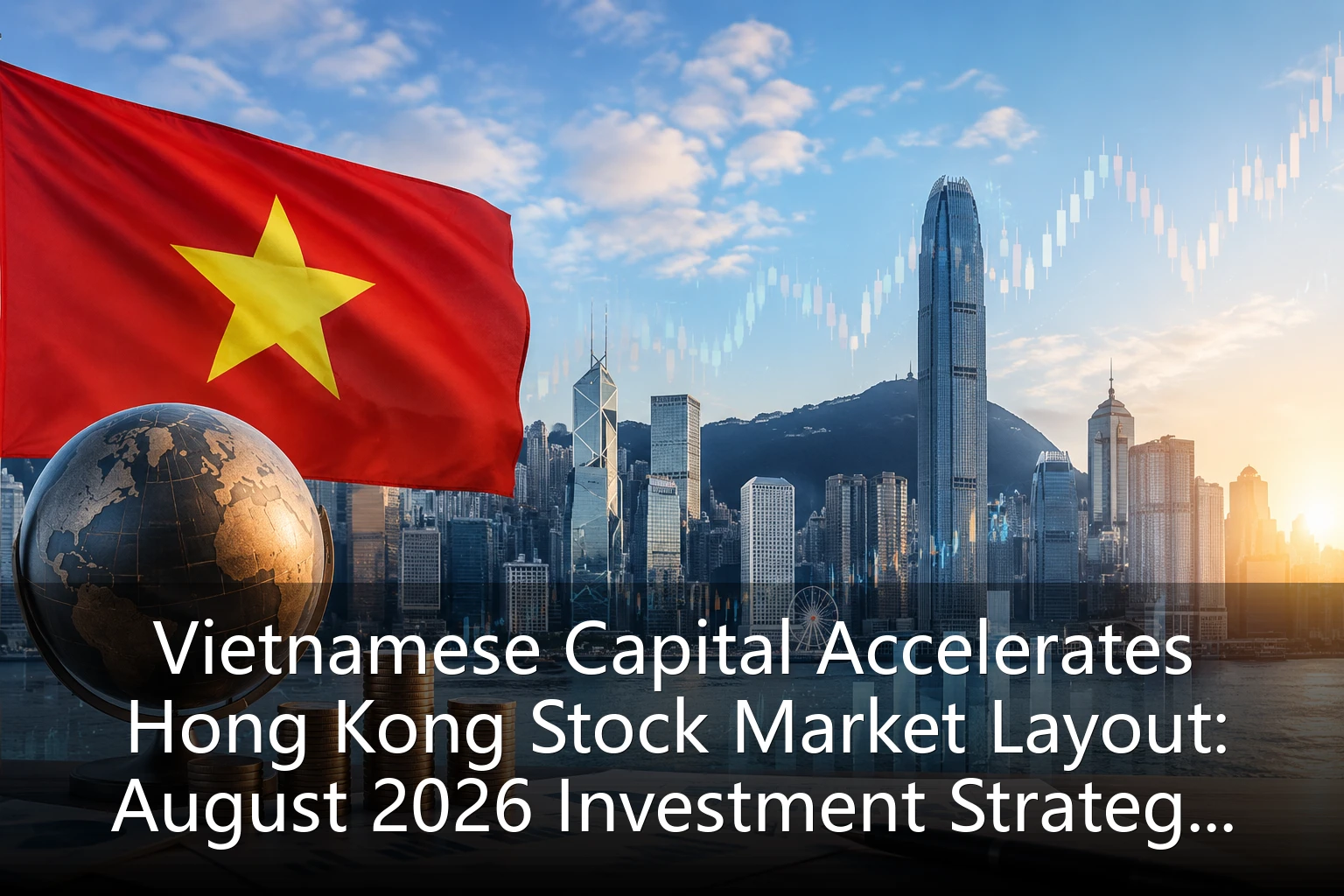
In August 2026, as Vietnam's economy continues steady growth and capital market openness increases, Vietnamese capital is accelerating toward the Hong Kong stock market at an unprecedented pace. This phenomenon not only reflects new trends in Southeast Asian regional capital allocation but also injects new vitality into the HK stock market. This article will conduct an in-depth analysis of the driving factors behind this capital flow, explore its impact on the HK stock market, and provide practical investment strategy recommendations for investors.
Current Status and Trends of Vietnam Capital Flows
According to the latest data from the State Bank of Vietnam, Vietnam's capital outflow reached a record $7.8 billion in the first half of 2026, with over 35% flowing to the Hong Kong stock market, making it the primary destination for Vietnamese capital outflows. This trend further accelerated in August, with more than $2 billion of Vietnamese capital flowing into the Hong Kong market through the HK Stock Connect mechanism in just the first two weeks.
Notably, this capital flow exhibits distinct structural characteristics. On one hand, Vietnamese domestic institutional investors, such as large institutions like the Vietnam National Fund and Vietnam Retirement Fund, are increasing their allocation to HK stocks, raising the proportion from less than 5% at the end of 2025 to over 12% currently. On the other hand, Vietnamese high-net-worth individuals and family offices are actively participating in HK stock investments, directing capital to the Hong Kong market through Qualified Foreign Institutional Investor (QFII) and cross-border wealth management channels.
Driving Factors Behind Vietnam Capital Flows to HK Stock Market
The accelerated flow of Vietnamese capital to the HK stock market is driven by multiple economic and institutional factors working in concert. First, the relatively low valuation level of the HK stock market strongly attracts Vietnamese capital. In August 2026, the Hang Seng Index's P/E ratio was approximately 9.2 times, significantly lower than Vietnam's VN Index at 14.5 times, providing ample space for value-seeking Vietnamese capital.
Second, Hong Kong's position as an international financial center and its mature regulatory environment provide a safety net for Vietnamese capital. Vietnamese investors particularly value the legal foundation and information disclosure transparency of the Hong Kong market, which complements the developmental characteristics of Vietnam's still-evolving capital market.
Third, Chinese enterprises account for nearly 70% of the total market value of the HK stock market. These enterprises are closely connected to the Chinese economy, and as Vietnam is an economy highly complementary to China's industrial chain, investors have a deeper understanding of the fundamentals of these Chinese enterprises, reducing investment risks arising from information asymmetry.
Additionally, the Hong Kong Stock Exchange has continuously optimized trading mechanisms in recent years, including reducing transaction fees, adjusting minimum tick sizes, and extending trading hours. These measures have significantly enhanced the liquidity and trading efficiency of the HK stock market, continuously increasing its attractiveness to international capital, including Vietnamese capital.
Analysis of HK Stock Market Dynamics in August 2026
In August 2026, the HK stock market showed a fluctuating upward trend. By mid-August, the Hang Seng Index had cumulatively risen by approximately 3.2%, outperforming major global indices during the same period. The inflow of Vietnamese capital became one of the important factors driving the performance of the HK stock market, particularly prominent in the technology, consumer, and financial sectors.
In terms of industry distribution, Vietnamese capital allocation to HK stocks shows clear industry preferences. Technology accounts for about 38%, consumer sectors for 27%, financial sectors for 21%, and the remaining 14% is distributed across energy, healthcare, and utilities. This allocation structure reflects Vietnamese capital's dual pursuit of high-growth industries and stable-return industries.
At the individual stock level, Vietnamese capital has concentrated on allocating to leading stocks such as Alibaba, Tencent, Meituan, China Ping An, and China Merchants Bank. These stocks not only have ample liquidity but also have stable dividend records, aligning with Vietnamese capital's characteristics of pursuing long-term value investment.
Impact of Vietnam Capital Flows on the HK Stock Market
The large-scale inflow of Vietnamese capital has had multiple impacts on the HK stock market. First, it has enhanced market liquidity. In August 2026, the average daily trading volume of HK stocks increased by approximately 18% compared to the same period last year, with southbound funds contributing to over 15% of this growth.
Second, it has elevated market valuation levels, particularly playing a positive role in the valuation recovery of Chinese enterprises. Many Chinese enterprises listed in Hong Kong have seen significant stock price rebounds driven by Vietnamese capital, with valuations of some technology leaders approaching historical average levels.
Third, it has promoted the internationalization process of the HK stock market. The addition of Vietnamese capital has diversified the investor structure of the HK stock market, reducing risks from single-market fluctuations and enhancing the market's risk resistance capabilities.
However, the rapid inflow of large amounts of foreign capital has also brought certain market volatility. When major adjustments occur in international markets, changes in Vietnamese capital flows may amplify fluctuations in the HK stock market, which investors need to monitor.
Investment Strategy Recommendations
For investors interested in investing in Vietnamese capital through the HK stock market, we propose the following strategy recommendations:
- Industry Allocation Strategy: Focus on the three major sectors of technology, consumer, and finance, which are key areas of Vietnamese capital allocation with good liquidity and growth potential. At the same time, appropriately allocate to high-dividend utility and energy sectors to balance the risk-return characteristics of the investment portfolio.
- Individual Stock Selection Strategy: Prioritize enterprises with core competitive advantages, sound financial conditions, and excellent management teams. Especially those Chinese enterprises with business operations in Vietnam or close ties to Vietnam's industrial chain are more likely to gain favor from Vietnamese capital.
- Timing Strategy: Monitor Vietnam's macroeconomic data and capital flow trends. Increase HK stock allocation when Vietnam's economic growth is strong and capital outflow accelerates; conversely, appropriately reduce positions.
- Risk Management Strategy: Adopt a diversified investment strategy to avoid excessive concentration in a single industry or stock. At the same time, use derivative instruments to hedge market risks, such as using stock index futures for hedging.
Future Outlook
Looking ahead, the trend of Vietnamese capital flowing to the HK stock market is expected to continue. As Vietnam's economy continues to grow and the middle class expands, the demand for international allocation of Vietnamese capital will continuously strengthen. Hong Kong, as an important hub connecting mainland China and international markets, will continue to attract inflows of Vietnamese capital.
However, this process may also face some challenges. On one hand, the development of Vietnam's domestic capital market may divert some capital; on the other hand, changes in the international political and economic environment may affect capital flows. Investors need to closely monitor changes in these factors and adjust investment strategies in a timely manner.
Overall, the accelerated allocation of Vietnamese capital to the HK stock market is an important phenomenon in the process of Southeast Asian regional economic integration and capital market opening, bringing new development opportunities to the HK stock market. For investors, understanding the driving factors behind this trend, seizing the investment opportunities it brings, while paying attention to related risks, will help achieve long-term and stable investment returns in a complex and changing market environment.
As the economic and trade ties between Vietnam and Hong Kong continue to deepen, the interaction between the two capital markets will become more frequent and close, providing investors with more diversified investment choices and broader development space. In this context, in-depth research on the characteristics and patterns of Vietnamese capital flows is of great significance for seizing investment opportunities in the HK stock market.